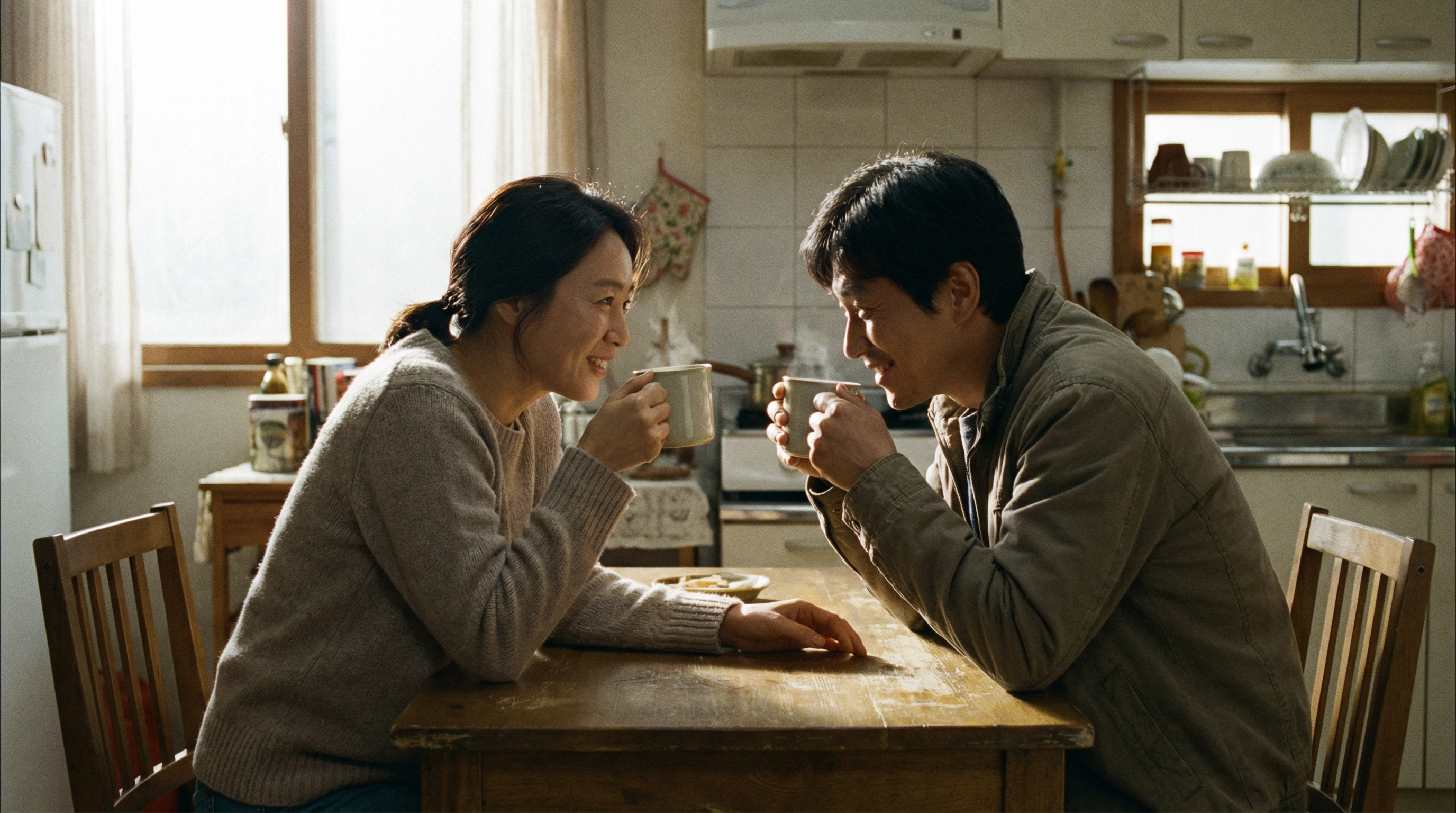
How to Start the Conversation With Your Husband
A step-by-step guide for the woman who is ready to open the door — but does not yet know how
Before You Begin
The conversation you are about to have is not a confession. It is not a request for permission. It is not a test, and it is not a trap. It is an honest conversation between two people who love each other — and it is one that many couples have had, and come out of closer than before.
The goal of this guide is not to convince your husband of anything. It is to create the conditions where both of you can say what is true — and hear each other without fear. That is all. What happens after that is yours to decide together.
Step One
Know What You Are Asking For — Before You Ask
Before you say anything to your husband, you need to be clear with yourself. Not certain — you do not need to be certain. But clear enough to answer the question he will inevitably ask: what exactly are you thinking?
Are you curious about the idea but not sure you want to act on it? Are you interested in exploring it together, with him fully involved? Are you hoping he will give you permission to pursue something on your own, with his knowledge? These are different conversations, and they require different words.
You do not need a complete answer. But you need enough of one to start. The women who have the hardest conversations are the ones who walk in without knowing what they want — and the ones who walk in with a clear sense of their own desire, even if it is tentative, tend to find the conversation goes better than they expected.
Step Two
Read the Signals He Has Already Given You
Most men who have this fantasy have already hinted at it — once, in a specific moment, in a way that was easy to miss or dismiss. Before you start the conversation, think back.
Has he ever commented on another man paying attention to you — and seemed more interested than bothered? Has he ever asked, in bed, what you would do if another man approached you? Has he ever mentioned a fantasy involving you and someone else, and then walked it back or laughed it off when you did not respond? Has he ever brought up a film, a story, or something he read — and watched your reaction carefully?
These are not random moments. They are the closest most men come to saying what they actually want. If any of them happened, you are not starting from zero. You are picking up a thread he already put down.
Step Three
Choose the Right Moment — Not the Right Words
Most women spend too much time rehearsing what they will say and not enough time thinking about when and where they will say it. The setting matters more than the script.
The best conversations of this kind happen when both people are relaxed, unhurried, and not in the middle of anything else. Not right before bed when one of you is tired. Not during a disagreement. Not in public. Not when the children are nearby. A quiet evening, a glass of wine, a moment when you both feel close — that is the environment you are looking for.
You are not scheduling a difficult conversation. You are creating a moment of intimacy in which something honest can be said. That is a different thing entirely, and it changes how both of you show up.
Step Four
Seed It First — Do Not Open With the Full Conversation
The most common mistake is treating this as a single conversation that has to go all the way in one sitting. It does not. The women who navigate this best tend to seed it first — introduce the idea in a low-stakes way, watch how he responds, and let it settle before going further.
A seed might sound like: "I read something interesting today — apparently one of the most common male fantasies is imagining their wife with another man. I had no idea that was so common. Did you know that?" And then you stop. You do not add anything. You watch his face. You listen to what he says — and what he does not say.
Or it might be a question in an intimate moment: "Has anyone ever told you they find me attractive?" And then, if the mood is right: "Does that bother you? Or does it do something else?"
A seed is not a lie and it is not a manipulation. It is an invitation — a small opening that lets him respond honestly without feeling cornered. If he is curious, he will lean in. If he is not ready, he will deflect — and that is information too.
Step Five
When You Are Ready to Say It Directly — Say It Simply
When the moment comes to say it plainly, say it plainly. Not with a long preamble. Not with so many qualifications that he cannot find the actual sentence. Something like:
"I want to tell you something I have been thinking about. I am not sure what I want to do with it yet — I just want to be honest with you. I have been curious about what it would be like to be with another man. Not instead of you. Alongside you. And I wanted to know if that is something you have ever thought about too."
That is it. You do not need more than that to open the door. You have named your desire, you have made clear it is not a replacement, and you have invited him to share his own truth without putting him on the spot.
Then you stop talking. You let him respond. Whatever he says first is not his final answer — it is his first reaction. Give him room to have it.
Step Six
How to Read His Response
His first response will almost never be his true response. Men who are surprised by this conversation — even men who have wanted it — often deflect, go quiet, make a joke, or say something cautious. That is not a no. That is a man who needs a moment.
What you are watching for is what comes after the first reaction. Does he ask a question? Does he seem curious even if he is pretending not to be? Does he come back to it later — that evening, the next day — as if he has been thinking about it? These are the signs that the seed landed.
A genuine no looks different. It is flat, it does not invite further conversation, and he does not return to it. If that happens, you have not lost anything — you have learned something true about where he is, and that is worth knowing.
What you are not doing is treating his first response as the verdict. Give him time. Give him space. And do not apologize for having said it.
Step Seven
If He Says Yes — Or Something Close to Yes
If he responds with curiosity, openness, or his own admission that he has thought about this — do not rush. This is not the moment to make plans. This is the moment to keep talking.
Ask him what he imagines. Ask him what he would want to be involved in, and what he would not. Ask him what his concerns are — because he will have them, even if he is excited. The couples who do this well are the ones who talk about it far more than they act on it before anything happens.
The Guide on this site walks through the structure that makes this work — the rules, the vetting, the conversation that comes before any decision. You do not have to figure it out alone. That is what this community is here for.
What Not to Do
Do not frame it as a confession or an apology. You have not done anything wrong.
Do not bring it up during an argument or when either of you is stressed.
Do not present it as something you have already decided — present it as something you are thinking about.
Do not treat his first reaction as his final answer.
Do not apologize for having the desire. It is yours. It is real. It does not require an apology.
Do not push for a decision in the same conversation. Plant the seed. Let it grow.
Do not make it about someone specific. This is about the idea, not a person.
The Conversation Is Not the Hard Part
I know it feels like it is. But the women who have been through this — the ones who have had this conversation and come out the other side, whether it went the way they hoped or not — almost all say the same thing: the anticipation was harder than the conversation itself.
The silence is what is heavy. The carrying it alone is what is hard. The moment you say it out loud to the person you trust most, something shifts — even if the conversation is difficult, even if he needs time, even if it does not go perfectly. You are no longer alone with it.
That is worth something. That is worth a great deal.
The Full Guide
Setting Rules
Structure, rules, and what comes after the conversation
Next Step
Before You Begin
How to find the right person — and disqualify the wrong ones
Find Yourself
Which One Is You?
Four women. One of them is probably you right now
For Asian Women
If you are an Asian woman reading this — Japanese, Chinese, Korean, or from any part of East or Southeast Asia — the cultural layer on top of this conversation is particular. The expectation of the devoted wife. The silence that runs through the community on anything like this. The way you have been taught that desire and duty sit in opposition.
Red Lantern Wives was built specifically for you. Not as a general resource that happens to include Asian women — but as a community that understands the specific weight you are carrying, and the specific courage it takes to say something true in a culture that has taught you not to.
You are in the right place. Come in. →