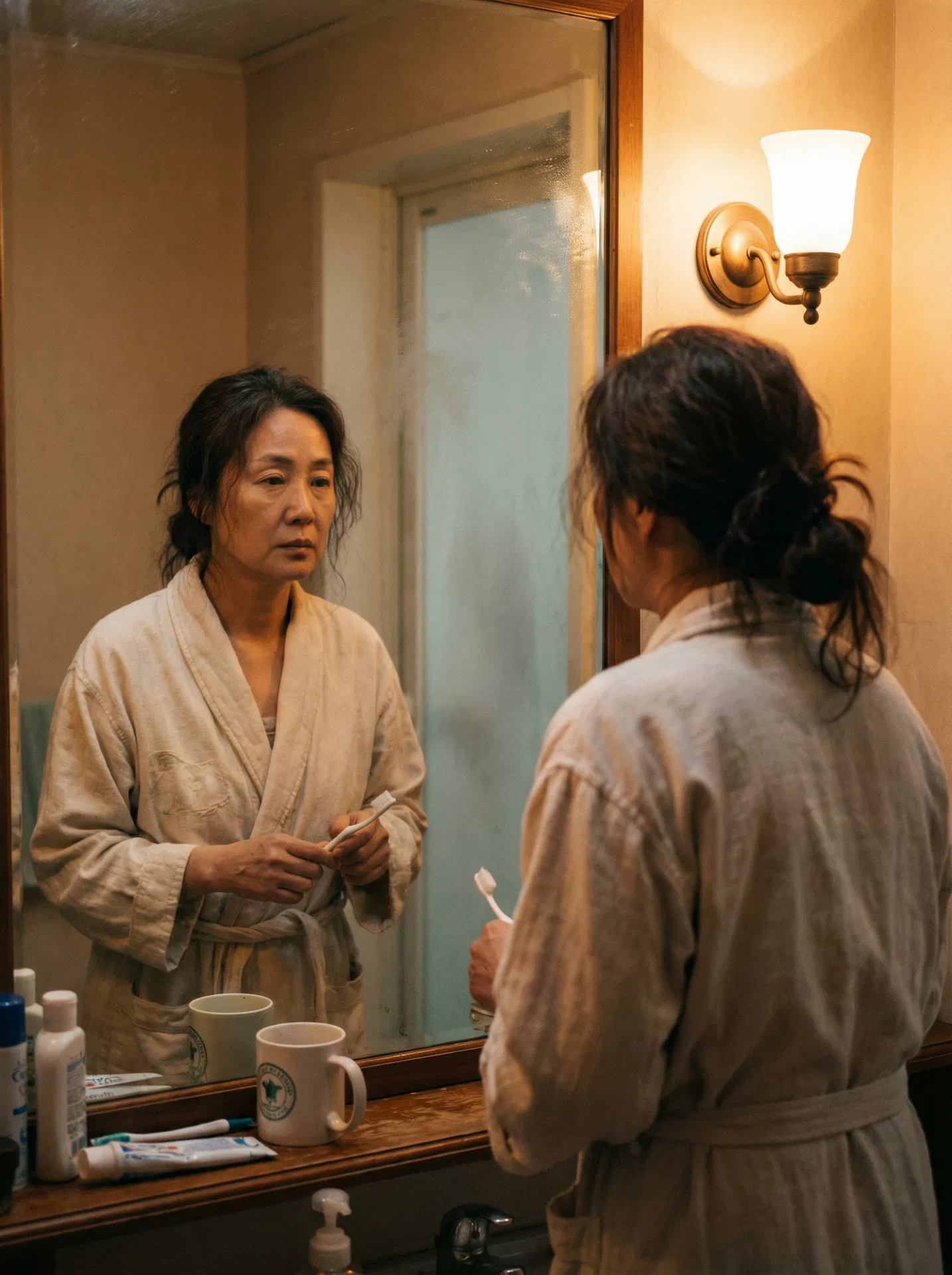
Let me tell you about a woman I spoke with a few months ago. Korean, 41, a project manager in Seattle, married for fourteen years. She had done everything right. She and her husband had the conversations — the real ones, the late-night ones, the ones that started at midnight and went until two in the morning, both of them lying in the dark saying things out loud that they had never said to anyone.
They had found someone. He was good — careful, respectful, patient. They had met him for coffee. The coffee meeting was everything she had hoped it would be. She went home that afternoon with her husband's hand in hers, both of them quiet in the best possible way, and she thought: we are ready.
And then, three days later, she pulled back.
Not because anything had gone wrong. Not because she had changed her mind about what she wanted. Not because the other man had done anything to concern her, or because her husband had said something that unsettled her. She pulled back because she got close enough to the edge to feel how real it was — and the realness of it was more than she had prepared herself for.
She called me because she was convinced something was wrong with her. She had wanted this for years. She had done everything right. And now, standing at the exact moment she had been building toward, she had stepped away from it. She wanted to know what that meant.
I told her what I am going to tell you now.
"It means you are human."
The pull-back is not a sign that you do not want this. It is not a sign that you are not ready, or that you have made a mistake, or that the desire was never real. It is a sign that you have arrived at the edge of something genuinely significant — and that your nervous system is doing exactly what a healthy nervous system does when it encounters something that will change you.
Because this will change you. Not in the ways that fear tells you it will — not damage, not loss, not the end of something. But it will change you. The woman who steps through this door is not quite the same as the woman who stood in front of it. She knows something about herself she did not know before. She has a different relationship with her own desire. She and her husband have a different kind of intimacy. These are real changes, and some part of you knows that, and the pull-back is that part of you asking: are you sure?
That is not weakness. That is wisdom.
Here is what I have observed, in years of conversations with women at exactly this stage: the pull-back almost always happens at one of three specific moments.
The first is right after the coffee meeting — when the fantasy has become a real person, with a real face and a real voice, and the abstraction is gone. This is what happened to the woman in Seattle. The desire was entirely real when it was still a thought. When it became a man sitting across a table looking at her in a way that already knew something, the reality of it landed differently than she had expected. Not badly. Just more heavily. The weight of it surprised her.
The second is right before the first private meeting — when the logistics are arranged and the date is set and there is nothing left to do but go. This is the moment when the mind starts generating scenarios, most of them involving things going wrong, and the body starts responding to those scenarios as if they are already happening. The anxiety is not evidence that the decision is wrong. It is evidence that the decision is real.
The third is right after the first experience — when the thing has happened and she is lying in bed at three in the morning not quite knowing what to do with all of it. This is not regret. It is processing. It is the mind and body integrating something new, something large, something that does not fit neatly into any category she has had before. The disorientation is temporary. The integration takes longer than most people expect.
All three of these pull-backs are normal. All three of them pass. And all three of them, if you let them, will tell you something useful about yourself.
"A pull-back is not a decision. It is a pause."
The question is not whether to feel the pull-back. You will feel it. The question is what you do with it.
The worst thing you can do is treat it as a verdict. A pull-back is not a decision. It is a pause. It is your nervous system asking for more time, more information, more conversation. Treating it as a permanent answer — I pulled back, therefore I do not want this, therefore we close this door forever — is almost always a mistake, and it is a mistake that forecloses something before you have had the chance to understand what the pause was actually about.
The best thing you can do is say it out loud. To your husband, first. Not as a confession of failure, but as information: I got close and I pulled back. I want to understand why. That conversation — the one that happens in the aftermath of the pull-back — is often the most honest conversation a couple has in this entire process. Because it requires both of you to sit with the complexity of what you are doing, rather than moving through it on momentum.
And sometimes, it requires saying it to someone outside the marriage. A friend who understands this world. Someone who will not treat your uncertainty as a problem to be solved, but as something to be heard.
The woman in Seattle called me again six weeks after that first conversation.
She and her husband had talked. Not once — many times. They had gone back to the beginning, not to start over, but to understand what the pull-back had been about. What she discovered, in those conversations, was that the pull-back had not been about fear of the experience itself. It had been about a specific thing she had not said out loud yet — a boundary she had not named, a condition she had not articulated, something she needed to be true before she could step forward. Once she named it, and once her husband heard it, and once the other man understood it, the hesitation dissolved.
She did not pull back again.
What she told me, afterward, was that the pull-back had been the most important part of the process. Not the obstacle — the information. It had told her something she needed to know, and knowing it had made everything that followed more honest, more grounded, and more hers.
The desire you have been carrying — the one that brought you to this site, the one that has been present and private and unspoken for however long it has been present — that desire does not expire. It does not go away because you stepped back. It does not become less real because you needed more time. It is still there, exactly where you left it, patient and specific and yours.
The pull-back is not the end of the story. It is the part of the story where you find out what you are actually made of — and where you discover that you are more capable of honesty, more capable of courage, and more capable of this than you knew.
The door is still there. You will know when you are ready to open it again.
— Grace
Continue Reading